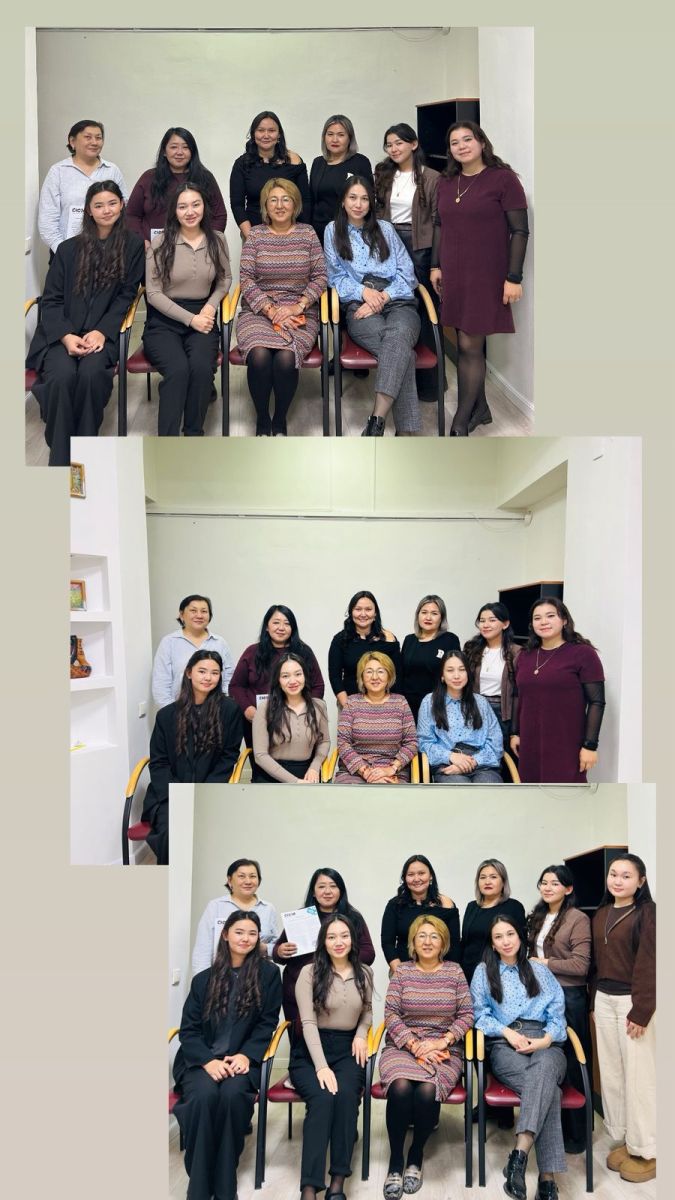
Doctoral Students in Almaty at the CIOM Platform: A New Format for Supporting Young Researchers
On 11 November, the office of the Public Opinion Research Center (CIOM) hosted the first meet-up for doctoral students, dedicated to the development of research in the social sciences. The initiative to launch this format belongs to the CIOM team, while the key role in its support and institutionalization is played by the Director of the Centre, Candidate of Sociological Sciences Gulzhan Toktamysovna Alimbekova. She acted as the project’s ideological inspirer and emphasized the importance of regular platforms where young researchers can discuss their work and professional plans.
The event marked the start of a series of monthly doctoral meet-ups, which are planned to be held in the second week of each month, on Thursdays. The first meeting brought together doctoral students, primarily in sociology and social work, from leading universities and research institutions in Almaty. The discussion also involved practicing researchers, academic sociologists, doctoral students from Al-Farabi Kazakh National University (KazNU) and Abai Kazakh National Pedagogical University (KazNPU), staff of the National Library of the Republic of Kazakhstan, a representative of the Almaty city administration, heads of research companies, and students interested in the development of social knowledge. This composition ensured an intergenerational, inter-institutional dialogue with a broad methodological spectrum, exactly the kind of format that Kazakhstani sociology needs today. The concept of the meet-up series is the gradual formation of a community of doctoral students in Kazakhstan, and the first meeting became its Almaty-based core.
The substantive part of the meet-up was built around presentations by the doctoral students themselves. Gulzhan Turysbekovna Artykbaeva presented a paper titled “Sociological Analysis of the Phenomenon of Shame (uyat),” demonstrating how the cultural category of shame can be conceptualized within contemporary sociological analysis. Saltanat Adirovna Nusupbaeva delivered a presentation on “Migration and the Formation of a Monoethnic Kazakh Society in Kazakhstan: Historical, Social and Cultural Aspects,” in which she examined the influence of migration processes on the ethno-demographic and cultural structure of the country. Ainur Aibynovna Bakytzhanova presented a paper “Women’s Reproductive Health in Kazakhstan: Social Determinants and Approaches to Its Study,” focusing on the social factors influencing reproductive health and on the specifics of its empirical investigation. Across all presentations, particular attention was paid to research design, the combination of quantitative and qualitative methods, and work with field data; the format itself became an opportunity for doctoral students to articulate their projects in professional language and receive substantive feedback.
The discussion showed that the demand for such meetings goes far beyond the simple exchange of information about dissertations. Participants raised questions about how to balance academic workload, research projects and employment in universities or research centres; how to build productive dialogue with academic supervisors; how to plan publications in Kazakhstani and international journals; and how to search for partnerships and resources for fieldwork. Language strategies also became an important theme: in which languages to write articles and dissertations, and how to maintain a strong connection with the Kazakhstani context while remaining within the international academic field. Questions from the audience touched on very practical aspects as well, from time management and prevention of professional burnout to research ethics and responsible handling of data. The lively, at times very candid atmosphere showed that doctoral students need not only the formal academic hierarchy, but also horizontal ties and mutual support.
In closing the meeting, the organizers and participants agreed that the meet-up was not a one-off event but the beginning of an important tradition. In this process, CIOM acts not only as a venue, but as an institution that consistently supports young researchers, provides them with space for professional growth, and helps to build connections between academic and applied sociology. In the longer term, the series of meet-ups may evolve into a stable community of doctoral students, where different thematic and methodological approaches intersect and new research collaborations emerge. For Kazakhstani scholarship, this implies not only strengthening human capital, but also fostering a culture of open, honest and professional conversation about complex social processes, a culture that begins with such seemingly modest, yet in fact strategically significant meetings.