KAPIOR Research Sprint Competition: University, Business, Practice, and the Research Market in One Project
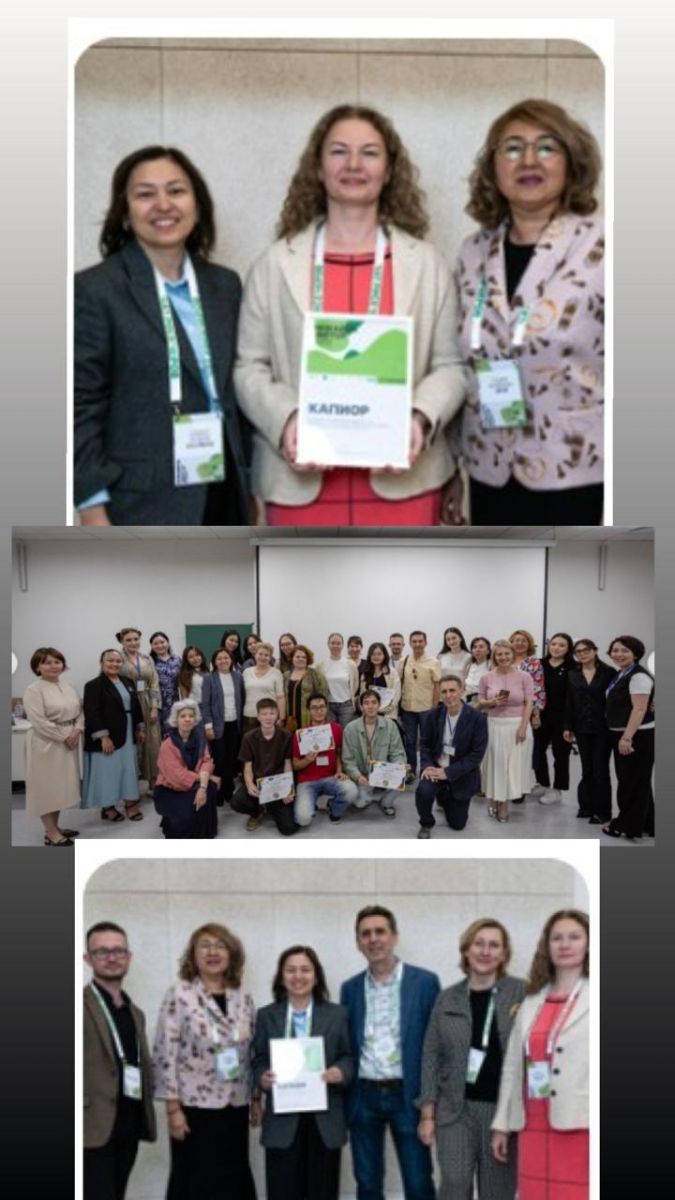
On June 3, 2026, Narxoz University hosted the final stage of the first Research Sprint competition, organized by the Kazakhstan Association of Professional Opinion and Market Researchers (KAPIOR). The initiative brought together students, university faculty, research companies, and business representatives to address real-world research challenges.
The Center for Public Opinion Study (CIOM) was represented in the competition by its Director and KAPIOR member Gulzhan Toktamysovna Alimbekova, who served as a mentor to one of the research teams, as well as by CIOM staff who supported the initiative. For CIOM, participation in the project represented a continuation of its long-standing commitment to strengthening research culture and developing the next generation of research professionals.
The main value of Research Sprint lies not in its competitive format itself. Its significance is that students were given an opportunity to complete the full cycle of applied research from defining a research problem to developing recommendations for a client using real-world cases.
Four student teams from universities in Almaty participated in the competition. They were supported by mentors from among practicing KAPIOR researchers, including executives and leading specialists from research companies. The expert jury included representatives of the research industry, business, and sponsoring organizations.
1. Research Sprint as a New Format for the Professional Socialization of Researchers
Research Sprint demonstrated that the development of a researcher begins not with learning isolated research methods, but with engagement in the full research cycle. For future professionals, it is not enough to know how to design a questionnaire or process a dataset. They must understand how a research problem is formulated, how a business request is translated into measurable indicators, how hypotheses are tested, and how empirical data are transformed into actionable conclusions.
In this sense, the competition was more than a student contest. It functioned as a practical model of professional socialization. Students worked not on hypothetical academic topics, but on real research challenges presented by sponsoring organizations. This changes the quality of their analytical thinking and increases their sense of responsibility. Researchers begin to understand that an error in methodology or question formulation is not merely an academic imperfection, but a potential risk of producing a distorted picture of social or market reality.
For CIOM, this is particularly important. A high-quality research industry cannot be built solely through technology, software, or access to large datasets. Its foundation is people who are capable of rigorous thinking, asking precise and meaningful questions, recognizing the limitations and potential of data, interpreting evidence critically, and taking responsibility for their conclusions.
2. Connecting Universities, Business, and the Research Market as a Condition for the Development of Kazakhstan’s Research Industry
Research Sprint demonstrated the need for a functioning rather than merely formal bridge between academia and the research market. Universities provide theoretical foundations and methodological knowledge, while the market requires the ability to work with uncertainty, deadlines, clients, limited resources, and practical outcomes.
From this perspective, KAPIOR’s role is particularly significant. The Association acted not only as the organizer of the competition and the driving force behind a new format, but also as a professional platform connecting students, academics, research companies, and businesses within a single process.
Such a format creates a new institutional logic: education, the market, and business begin to jointly produce not only collaborative projects, but also the next generation of research professionals.
Another important outcome of the competition was the internal consolidation of KAPIOR members themselves. Mentoring became not only a form of practical support for students and an individual professional contribution, but also a mechanism for professional exchange among KAPIOR members and a new challenge for participating companies. Joint work on the competition strengthened horizontal professional ties, created new opportunities for collaboration, and demonstrated that the development of the industry requires creative, practice-oriented collective initiatives.
For Kazakhstan’s research market, this is an important signal. Competition between companies should not undermine their shared responsibility for professional standards or their contribution to the development of the national research sector. Training young researchers, strengthening professional standards, exchanging expertise, and supporting universities represent a shared professional mission and responsibility.
3. The CIOM Project: School Meals as a Social and Research Issue
As part of the competition, CIOM supported a team from Kazakhstan-German University working on the project “Food for the Future: An Independent Assessment of Children’s Nutrition in Educational Institutions in Kazakhstan through Parents’ Perceptions.” The team received mentorship from Gulzhan Toktamysovna Alimbekova and Olga Karaeva. The project client was Almira Orlova, a nutritionist and consultant specializing in child and school nutrition, and the founder of the ASTAU project and the healthy food brand Ragout Kazakhstan.
The team conducted a comprehensive applied sociological study aimed at independently assessing the school nutrition system through the perspectives of parents. The research examined parental satisfaction with the quality, safety, and accessibility of school meals; levels of trust in existing state monitoring and control mechanisms; and parents’ perceptions of the impact of school nutrition on children’s health and well-being. Based on the empirical findings, the team identified key systemic challenges and developed evidence-based practical recommendations for the further development of the ASTAU project and Ragout Kazakhstan initiatives led by Almira Orlova.
The project focused on an independent assessment of the current situation regarding schoolchildren’s nutrition through parental perceptions. The research examined the quality and safety of school meals, levels of trust in the monitoring system, the extent to which school nutrition meets parental expectations, and perceived effects of school meals on children’s health.
The scientific value of this topic lies in the fact that school nutrition should not be viewed solely as an organizational or service-related issue. It is also a matter of social policy, child health, institutional trust, parental oversight, and the quality of children’s everyday environments. Examining the issue from this perspective makes it possible to identify a broader social mechanism: how families evaluate public and educational institutions, where distrust emerges, and which problems remain invisible within formal reporting systems.
The third-year students of the Marketing program Nigora Abibulloyeva, Ekaterina Ponomarenko, and Asem Ubasheva under the supervision of Senior Lecturer K. B. Kashkimbayeva, completed the key stages of the research process: problem exploration, methodological design, research instrument development, data analysis, and presentation of findings. The project ultimately took second place in the competition.
For CIOM, this achievement is important not merely as an award. It demonstrates that, with a clearly defined research problem and professional mentorship, a student team can produce meaningful empirical findings and practical recommendations. This confirms the central principle of Research Sprint: young researchers should learn not through abstract examples alone, but through engagement with real social issues where evidence matters for decision-making.
Key Outcomes
The Research Sprint competition demonstrated that Kazakhstan has a growing demand for a new model of researcher training based on real-world practice, mentorship, and interaction with business.
For students and university supervisors, the competition provided an opportunity for intensive practical learning and professional development, enabling participants to complete a full research cycle, understand the practical value of research, and experience professional interaction with clients.
For universities, it offered an opportunity to strengthen the applied component of their educational programs.
For businesses, Research Sprint provided a mechanism for generating new evidence, testing hypotheses, addressing current challenges, and identifying emerging talent.
For research companies, it created a platform for developing mentorship practices, exchanging professional expertise, and building the future talent pipeline of the industry.
Equally important was the strengthening of professional collaboration within KAPIOR. Joint work on the competition demonstrated that the development of the research market requires not only competition, but also cooperation, collective initiatives, and shared responsibility for professional standards and the future of the field.
Conclusion
Today, the research industry is facing new challenges. Artificial intelligence is accelerating data processing, digital technologies are expanding analytical capabilities, and new sources of information are emerging. Yet no technology can replace research thinking the ability to formulate a problem, ask the right questions, critically assess evidence, and interpret findings responsibly.
Investment in young researchers is therefore no less important than investment in technology. The quality of future research and consequently the quality of managerial, social, and business decisions based on that research will depend on the quality of training provided to the next generation of professionals.
In our view, Research Sprint confirmed a simple but important principle: a professional researcher is not formed solely in the classroom, nor only after entering the workforce. Professional competence develops through participation in real projects, engagement with data, responsibility for research outcomes, and direct interaction with clients and stakeholders.
The Center for Public Opinion Study (CIOM) expresses its gratitude to every KAPIOR member, the leadership of Narxoz University, partner organizations, jury members, mentors, and student teams for making this initiative possible.
We believe that initiatives of this kind should continue to develop and become a sustainable platform for training a new generation of researchers in Kazakhstan professionals capable of working at the intersection of science, society, and practice.