The digitalization of social research as a matter of methodology, not fashion
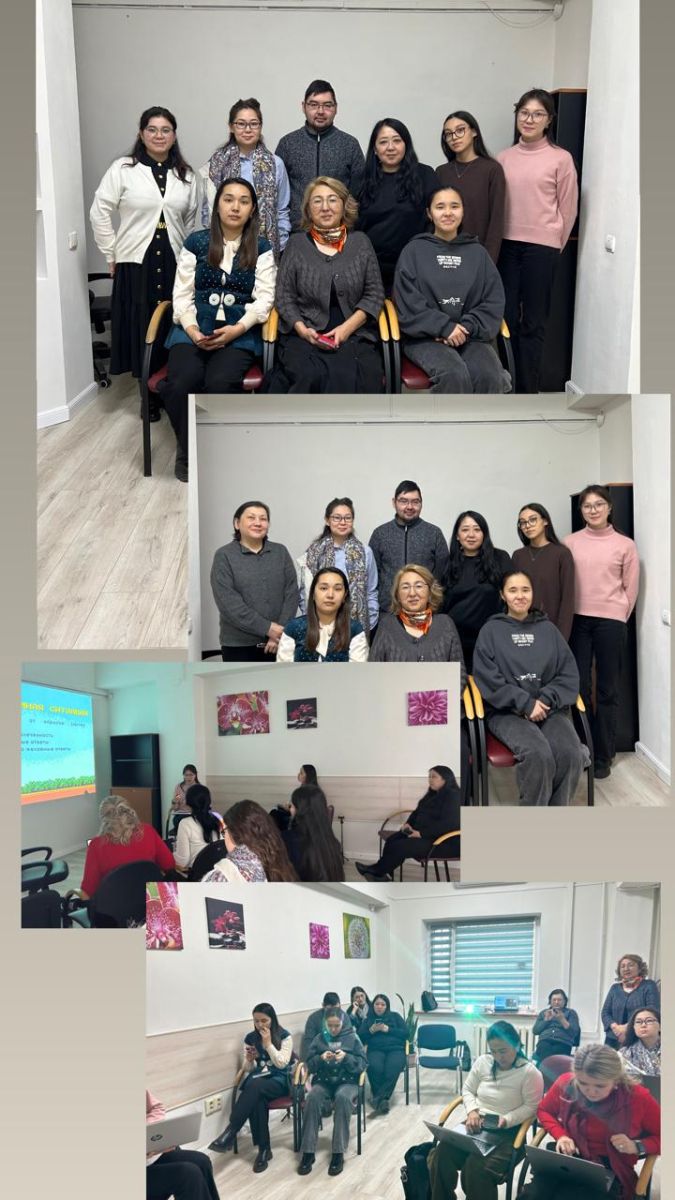
On March 5, 2026, the Center for the Study of Public Opinion held its fourth offline meet-up dedicated to the digitalization of social research. At the center of the discussion was one of the fundamental questions facing contemporary science: how to use new digital tools without compromising research quality. Researchers, doctoral candidates, and postdoctoral scholars from different universities and professional fields took part in the meeting, giving the discussion an interdisciplinary and intellectually rich character. The focus was not on technological innovations as such, but on how digital solutions can strengthen research logic, analytical discipline, and the evidential basis of conclusions.
A separate part of the meeting was devoted to the analysis and visualization of statistical data in social research. In her presentation, Ainur Bakytzhanova focused on practical approaches to working with Qualtrics, SPSS, and tools for the visual presentation of results. Particular emphasis was placed on the fact that data processing in social science cannot be reduced to technical work with a dataset alone. Rather, it involves translating empirical material into a form suitable for verification, interpretation, and professional discussion. The persuasiveness of a research result is determined not by the impressiveness of its presentation, but by the precision of operationalization, the correctness of analysis, and the clarity with which evidence is presented.
The presentation by Adina Elubayeva, a student at NARXOZ University, on gamification in social research and the creation of digital research games using artificial intelligence was also of substantial intellectual importance. This topic is often perceived in an oversimplified way, as merely a means of making participation more engaging or dynamic. However, the approach presented in her talk treated gamification much more deeply: not as external decoration of a study, but as a distinct logic for designing interaction with participants. When properly developed, it can increase engagement, sustain attention, reduce respondent fatigue, and create more complex scenarios for data collection. At the same time, its research value emerges only when game mechanics are subordinated to the tasks of measurement rather than replacing them.
A particularly important place in the discussion was occupied by the issue of applying artificial intelligence in research practice. Today, AI is increasingly used for text processing, structuring interviews, preliminary coding, identifying recurring semantic units, and accelerating the preparation of analytical materials. However, within the meet-up, this topic was framed through a mature research perspective: artificial intelligence was considered not as an autonomous analyst, but as a supporting tool that requires constant verification, critical oversight, and an understanding of its own limitations. This is where the key methodological shift lies: the question is no longer whether AI should be used in social research, but how it can be integrated into the research process without losing validity, context, and responsibility for interpretation.
In a broader sense, the digitalization of social research today is no longer a matter of technical convenience, but a matter of research maturity. New tools are changing not only the speed of work, but also the very structure of the research process: the ways data are recorded, the depth of interpretation, the logic of interaction with participants, and the standards of evidential reasoning. That is why discussion of AI, gamification, and visualization is important not at the level of listing available tools, but at the level of understanding what exactly they are changing within research methodology itself. Digital solutions should not simplify thinking; rather, they should strengthen the precision, transparency, and analytical rigor of social science.
The main conclusion of the meet-up is that the digitalization of social research must be discussed in the language of methodology, not in the language of technological enthusiasm. The meeting demonstrated a clear and growing demand within the research community for a more serious conversation about data quality, the logic of research design, new forms of interaction with respondents, and rigorous analytical work in a digital environment. In this sense, the meet-up became not simply a platform for exchanging tools, but a space for the professional calibration of research thinking. It is precisely such discussions that shape a new research culture in which digital technologies do not replace science, but enhance its precision, transparency, and intellectual integrity.